Industrial & Manufacturing Solar
In manufacturing, electricity is not overhead; it is an input cost on every unit you ship. Process equipment, compressed air, and climate control run all day, every day. Keen Energy builds commercial solar for industrial facilities, including a 793kW rooftop system for a plastic injection molding plant in La Verne.
800MW+
Founder Experience
30+
Years Leadership
C-10
Licensed
The economics of solar reward buildings that consume what they generate. A plant running production shifts through daylight hours consumes nearly everything its roof can produce, which is exactly the profile NEM 3.0 rewards.
Injection molding presses, CNC lines, compressors, chillers, and ovens draw steadily through first and second shift. Under NEM 3.0's reduced export compensation, that on-site consumption during operating hours is what preserves returns. Manufacturing plants export little because they use what they make.
Demand charges can be 30-70% of a commercial electric bill, and industrial equipment starting under load is what drives them. Solar offsets daytime peaks; optional battery storage adds peak shaving and load shifting on top. We model both configurations and show you the math, not marketing promises.
Utility rates fluctuate; your customer contracts do not. A solar system engineered for 30-year performance, built with Tier-1 equipment carrying 25-year manufacturer warranties, converts a volatile input cost into a fixed one you can build into pricing.
Manufacturing buildings offer the large roof planes that make commercial solar efficient. We build systems from 50kW to 5+MW, and mounting is engineered to the structure: our La Verne project used Solar Strap ballastless mounting to put 793kW on an industrial roof without ballast weight.
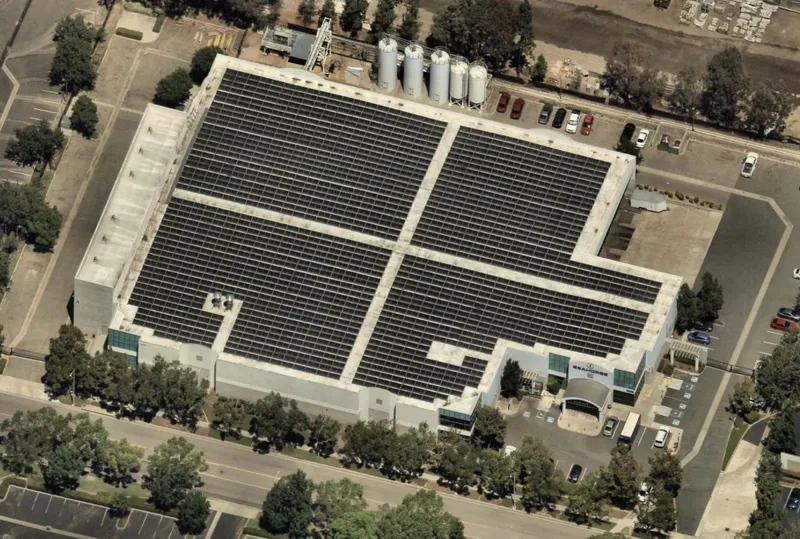
Case Study
Injection molding is among the most energy-intensive manufacturing processes: presses, dryers, and chillers pull power continuously through production hours. For this La Verne facility we engineered a 793kW rooftop system using Solar Strap ballastless mounting, sized against the plant's high industrial energy demands.
Electricians First. Solar Second.
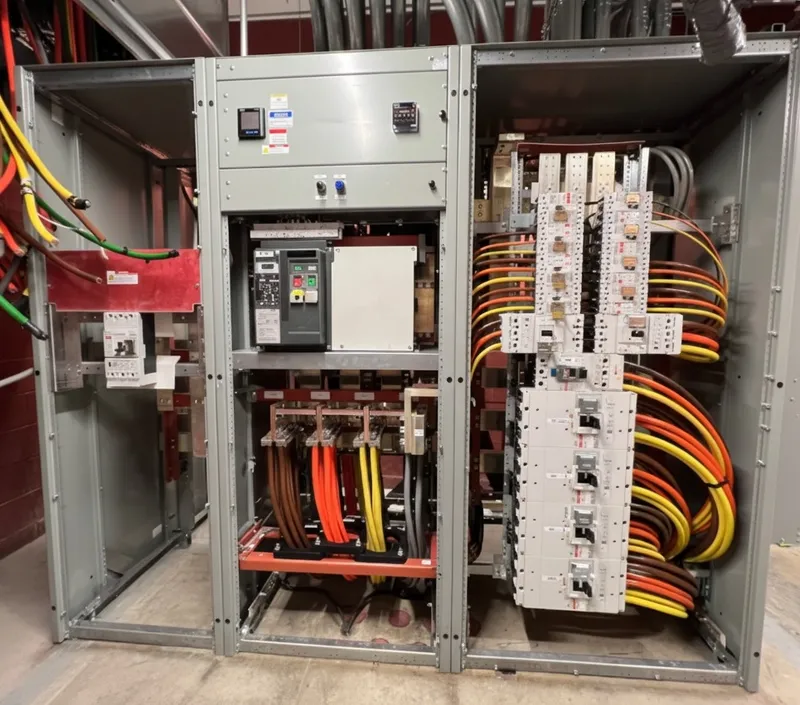
Tying a large array into an industrial electrical system is not the same as wiring a strip mall. Motor loads, sensitive controls, and aging switchgear all shape how the interconnection has to be engineered. Keen Energy is a C-10 electrical contractor with in-house crews of state-certified Journeymen and Apprentices, so the people designing your interconnection are the people building it.
Manufacturing systems are big enough that California labor compliance becomes a design variable, not an afterthought. Two thresholds matter, and where your system lands relative to them changes the economics.
The 30% federal Investment Tax Credit applies to commercial solar, but systems over 1 MW must meet prevailing wage and apprenticeship requirements to claim the full credit. Under 1 MW, the 30% applies without them. Equipment sourcing also has to satisfy FEOC requirements, which our procurement process manages.
California's AB 2143 attaches prevailing wage obligations to many interconnected projects, and system design determines whether those triggers apply. Avoiding them where legitimately possible can save 10-15% on commercial solar costs. The details are in our AB 2143 prevailing wage guide. Keen Energy is prevailing wage and DIR compliant either way, so compliance is built in, not bolted on.
Illustrative Ranges, Stated Assumptions
$2.20-$3.20
per watt installed before incentives for SoCal commercial solar in 2026; larger industrial systems trend toward the lower end. See the cost breakdown.
5-8 Years
typical payback for well-designed California commercial systems with the 30% ITC plus MACRS. High daytime consumption and high demand charges, the manufacturing profile, sit at the shorter end.
End of 2027
commercial entities can claim solar tax credits through the end of 2027. Prefer no capital outlay? A solar PPA delivers $0-upfront power at a fixed escalator.
These are typical ranges for systems of this class, not a quote; your rate schedule, load profile, and roof determine the real numbers, and that is what our free analysis models. For the broader business case, start with our solar panels for business guide, or see the warehouse and retail versions of this page. We build across Southern California, including Riverside and Corona.
Send us a recent utility bill and we will model what solar can do for your plant. No cost. No obligation. Just clear numbers on what solar can do for your business.
Tell us about your facility and we'll respond within 24 hours.
We've received your request and will be in touch within 24 hours.
Or call now: (949) 877-8008