Warehouse & Distribution Solar
The Inland Empire runs on logistics, and logistics runs on electricity. A warehouse roof is one of the best solar sites in California: large, flat, unshaded, and sitting directly above the loads it can serve. Keen Energy designs and builds commercial solar for warehouses with in-house C-10 electrical crews.
800MW+
Founder Experience
30+
Years Leadership
C-10
Licensed
Most commercial buildings compromise somewhere: too little roof, too much shading, loads that peak after sunset. Warehouses and distribution centers rarely have any of those problems. The building type that dominates Riverside, Corona, and the rest of the Inland Empire logistics corridor happens to be the building type solar serves best.
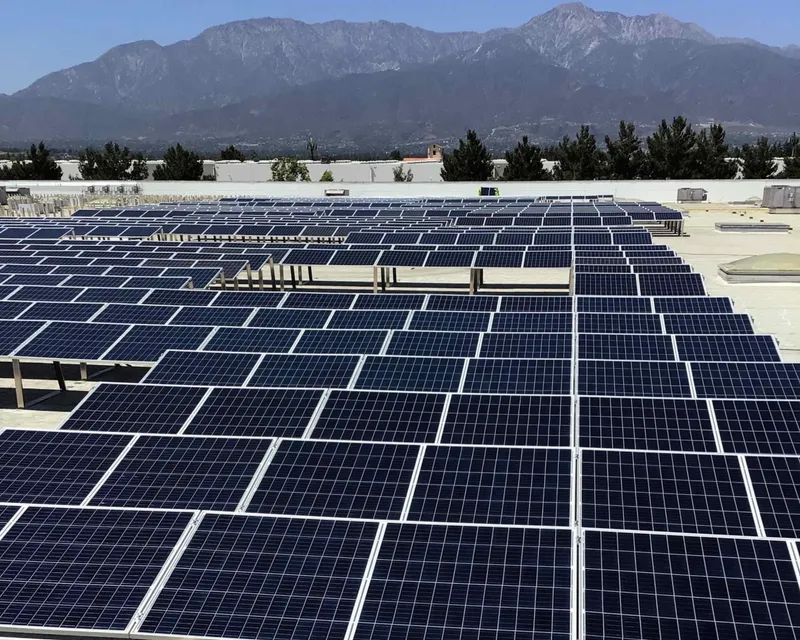
Warehouse roofs are large, low-slope, and usually free of the shading and clutter that limit other commercial buildings. That means more panels per building, simpler racking, and better production per dollar installed. Your roof is unused square footage; solar turns it into a revenue-generating asset.
HVAC, refrigeration and cold storage, high-bay lighting, conveyors, chargers for forklifts and material handling equipment: warehouse loads run hardest during daylight hours, exactly when the panels produce. Under NEM 3.0, consuming your own solar power on site during operating hours is what preserves returns, and warehouses do that naturally.
Demand charges can account for 30-70% of a commercial electric bill. Every time your dock doors open in July and the HVAC surges, your peak demand resets higher. Solar clips daytime peaks, and paired battery storage can shave them further. For a distribution operation, that is a direct operating-cost lever.
Grid infrastructure spending driven by AI data centers and EV adoption is being funded by ratepayers. A solar system fixes a major portion of your energy cost for decades: our systems are engineered for 30-year performance with Tier-1 equipment carrying 25-year manufacturer warranties.
A warehouse solar project succeeds or fails on the roof work. Membrane type, roof age, structural capacity, and drainage all shape the right mounting approach. Our engineering starts with a structural analysis, not a sales pitch.
Illustrative Numbers, Stated Assumptions
We show you the math, not marketing promises. The figures below are typical ranges for Southern California commercial projects, not a quote for your building. Your actual numbers depend on your rate schedule, load profile, and roof, which is exactly what our free analysis models.
$2.20-$3.20
per watt installed, before incentives, for SoCal commercial solar in 2026. Larger systems land at the lower end. Full cost breakdown.
30%
federal Investment Tax Credit for commercial solar. Systems over 1 MW must meet prevailing wage and apprenticeship requirements for the full credit; under 1 MW, the 30% applies without them.
5-8 Years
typical payback for well-designed California commercial systems using the 30% ITC plus MACRS depreciation. High daytime consumption and high demand charges push toward the shorter end.
Warehouses tend to sit at the favorable end of these ranges for two reasons: system size (economies of scale on a big roof) and load shape (heavy daytime consumption). If you would rather deploy zero capital, a solar PPA puts the system on your roof with $0 upfront and a fixed escalator, typically 2-3% versus the 5-6% historical utility increases. Prefer the numbers for the whole business case? Start at our solar panels for business guide.
Built, Not Promised
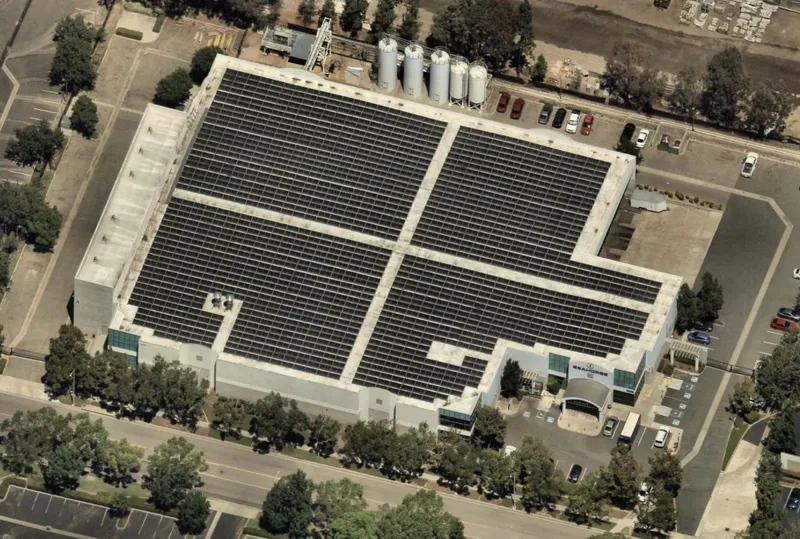
Our La Verne project is the closest thing to a warehouse blueprint we can show you: a large industrial rooftop, a facility with high industrial energy demands, and Solar Strap ballastless mounting that carries the array without compromising the roof. The same engineering approach applies directly to distribution and logistics buildings.
See the La Verne Case StudyKeen Energy is headquartered in Riverside County, in the middle of the Inland Empire logistics market. We build across Riverside, San Bernardino, Orange, Los Angeles, and San Diego counties, and we work across SCE, SDG&E, LADWP, and other Southern California utility territories. If your building is in Riverside, Corona, or anywhere along the I-215 and 91 corridors, we are local, not a traveling crew.
For warehouses, batteries earn their keep through peak shaving, load shifting, and export avoidance under NEM 3.0. They are optional. We model your project with and without storage and show you both sets of numbers, so the decision is yours and it is a financial one.
A warehouse array is a 30-year asset and we build for 30-year+ serviceability: accessible layouts, clear documentation, and operations and maintenance services that keep production where the model said it would be. We stand behind our work.
Run a manufacturing plant instead of a distribution center? See our manufacturing solar page. Retail center or car lot? Start with retail solar solutions.
Send us a recent utility bill and we will model what solar can do for your warehouse. No cost. No obligation. Just clear numbers on what solar can do for your business.
Tell us about your facility and we'll respond within 24 hours with next steps.
We've received your request and will be in touch within 24 hours.
Or call now: (949) 877-8008