
Solar and Storage on a Building That Never Stops
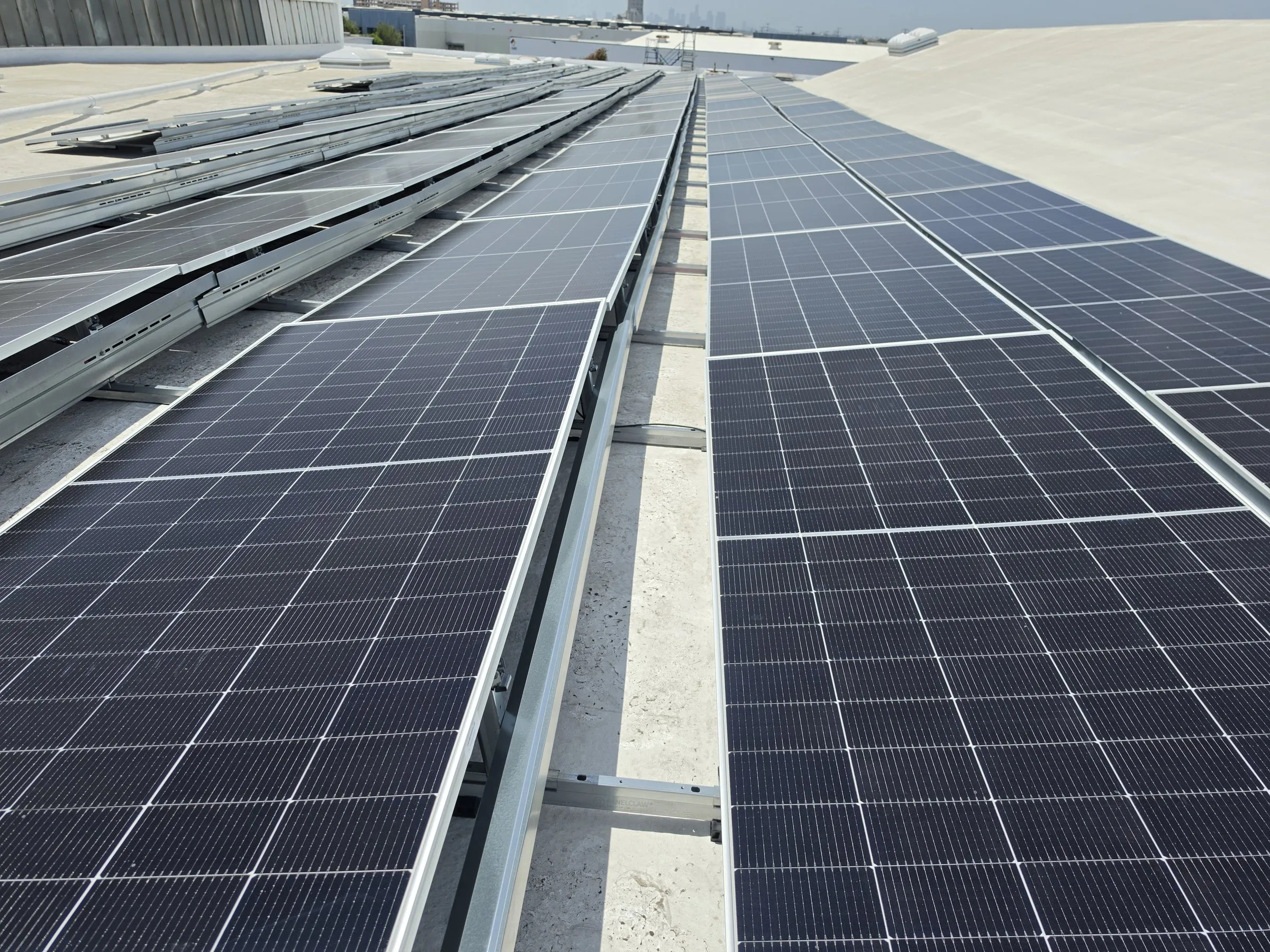
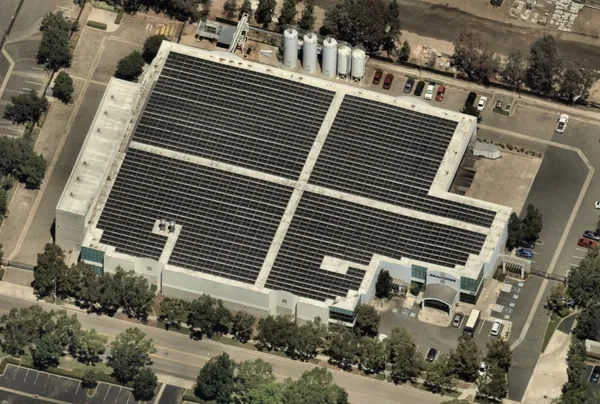
Warehouses in the Commerce and Vernon corridor have exactly what solar wants: big, flat, unshaded roofs. They also have tenants running forklifts and trucks every hour of the shift, so the job had to be staged around operations from day one.
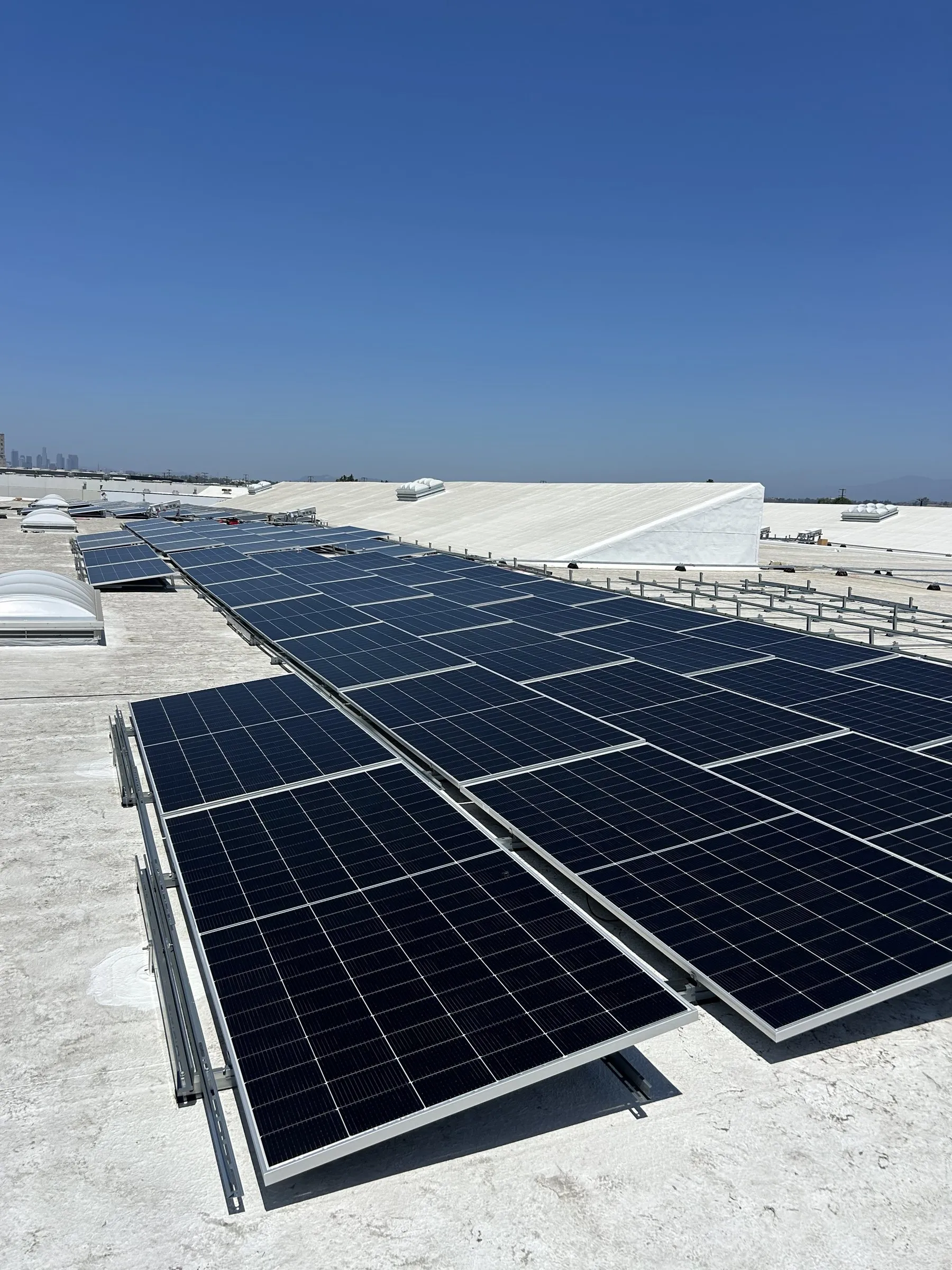
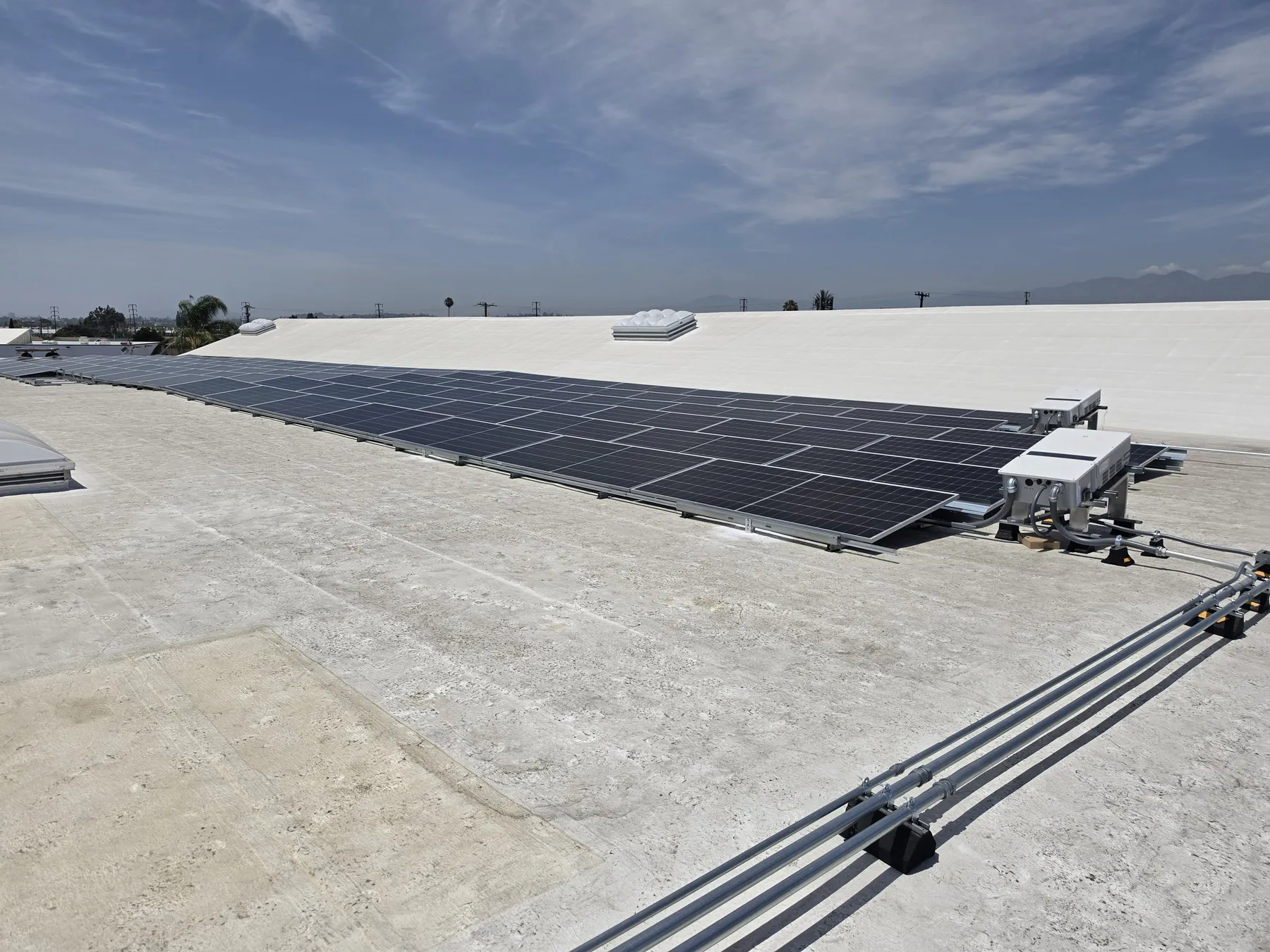
The roof itself set the mounting strategy. A fully ballasted system holds the array down with weight instead of bolts, so the membrane stays intact. The site host also needed a new stair tower for safe, code-compliant roof access before the array could go up.
Adding storage changes the economics under NEM 3.0: instead of exporting midday solar at low credit rates, the battery holds it for the evening peak when SCE rates are highest.
The Build, Photographed
Job-site photos from the finished installation. Click any photo to enlarge.
Scope Delivered
380kW Ballasted Array
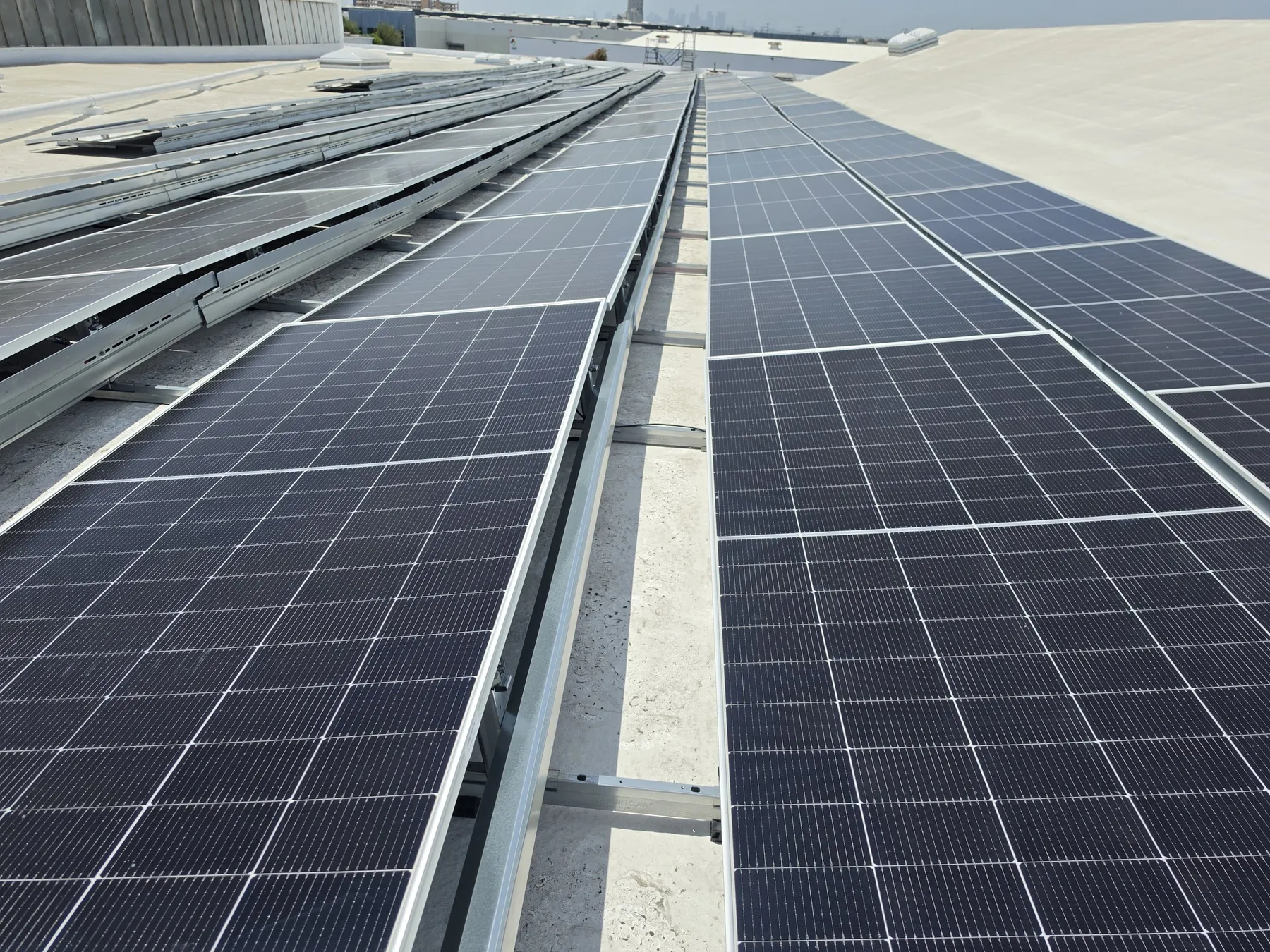
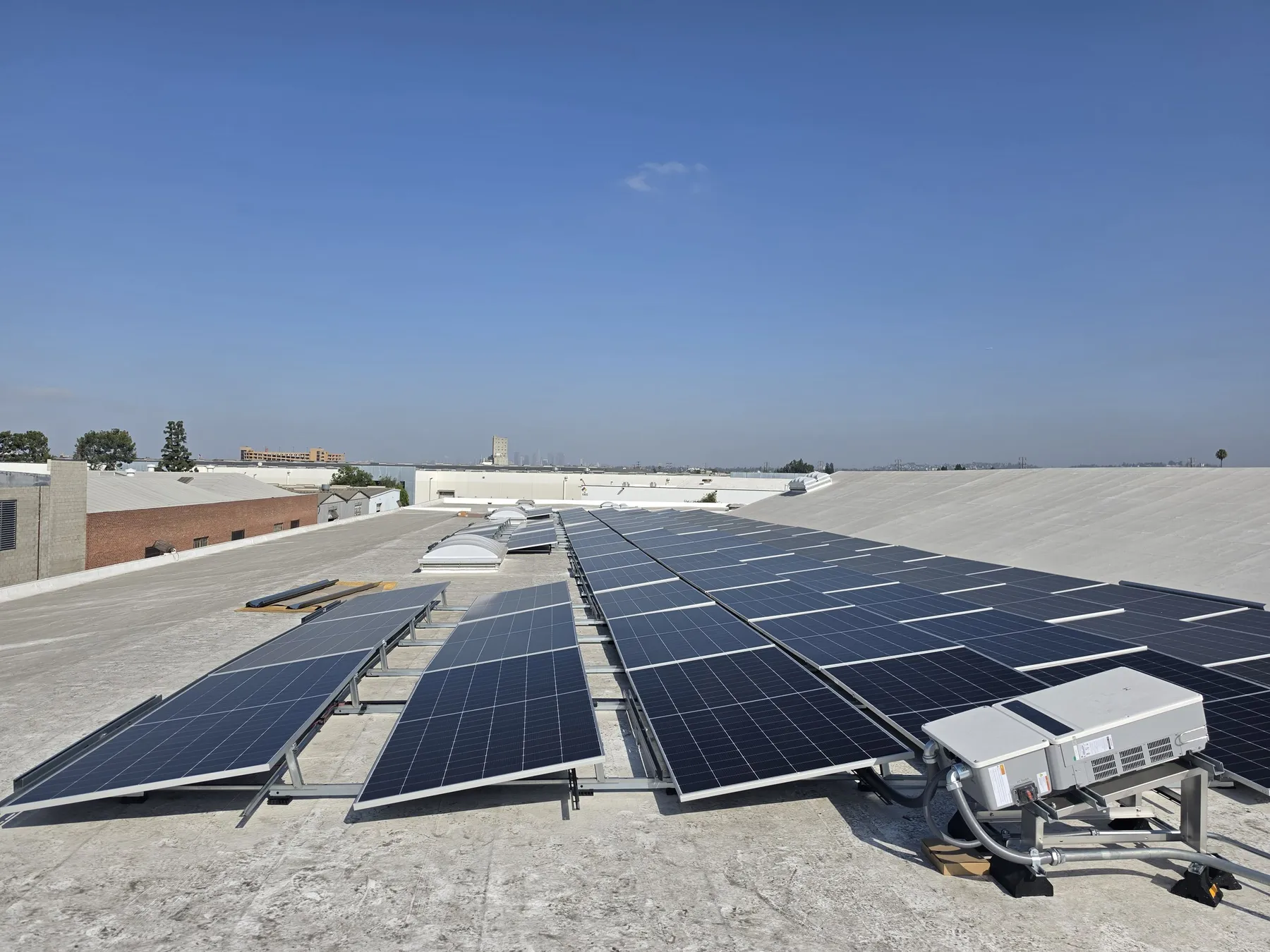
Long, straight rows across the warehouse roof on ballasted racking, with no penetrations through the roof membrane.
250kWh Battery System
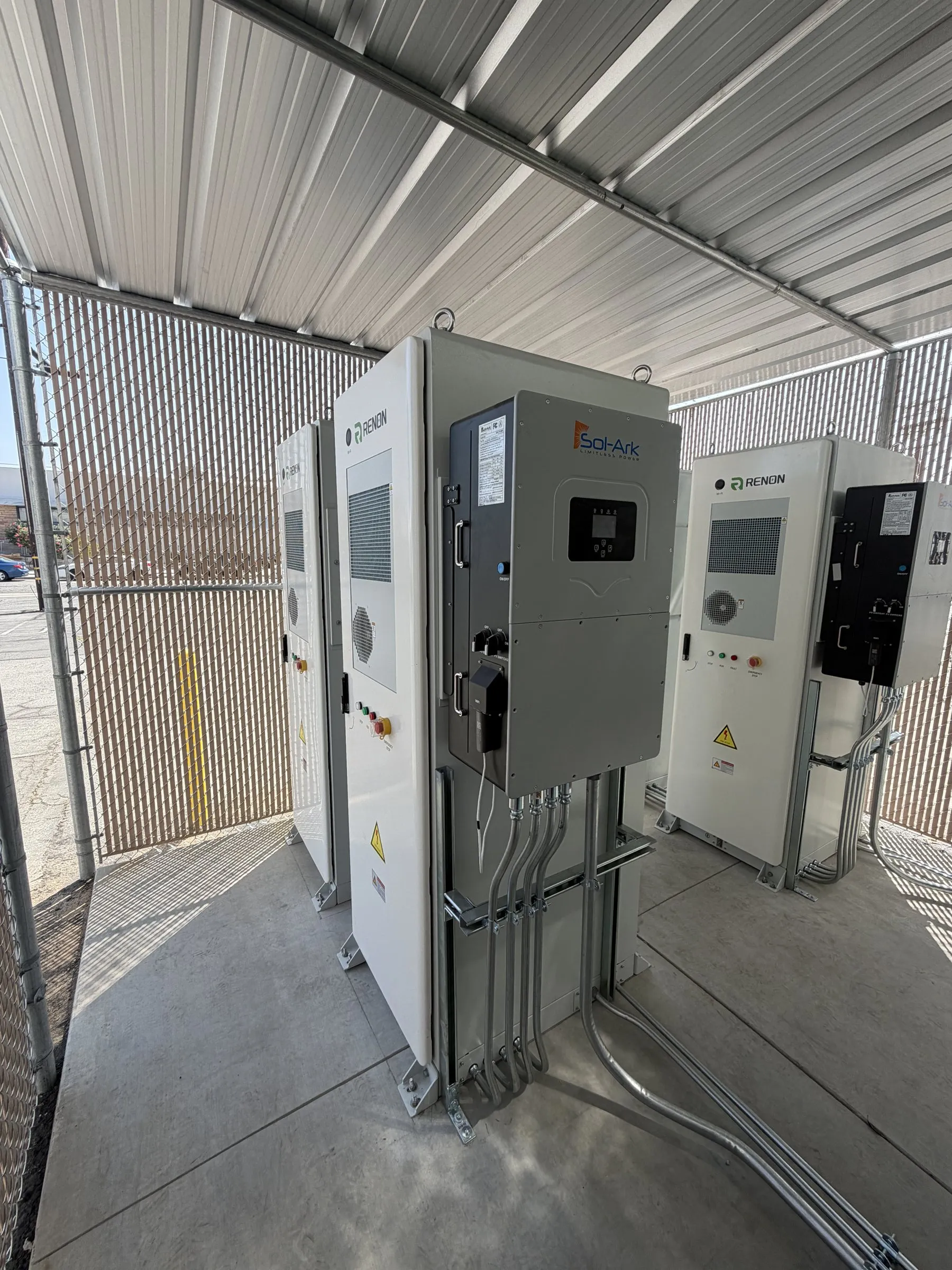
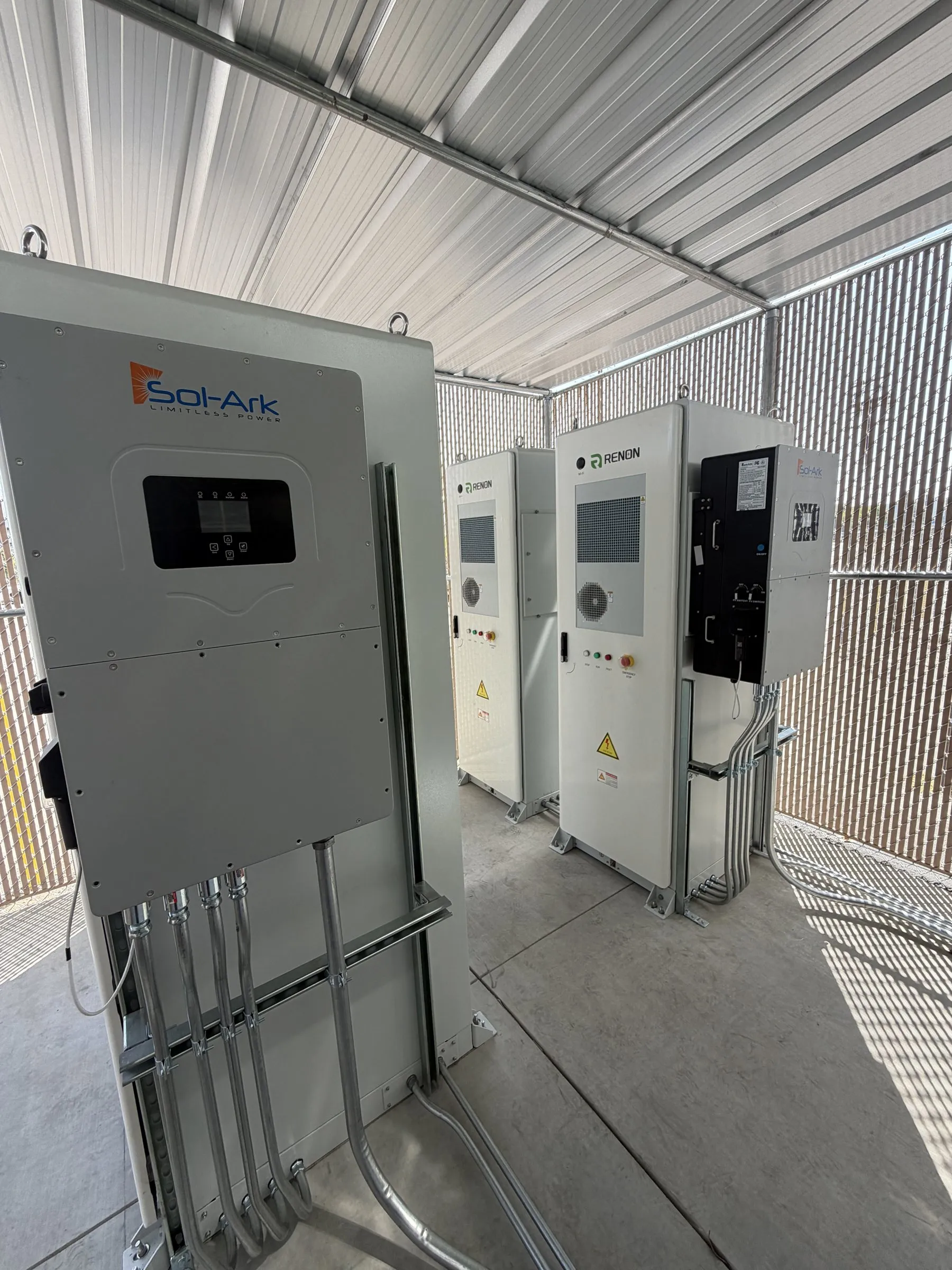
Hybrid inverters and battery cabinets on a ground-level pad inside a fenced, covered enclosure: secure, shaded and easy to service.
Line-Side Tap Interconnection
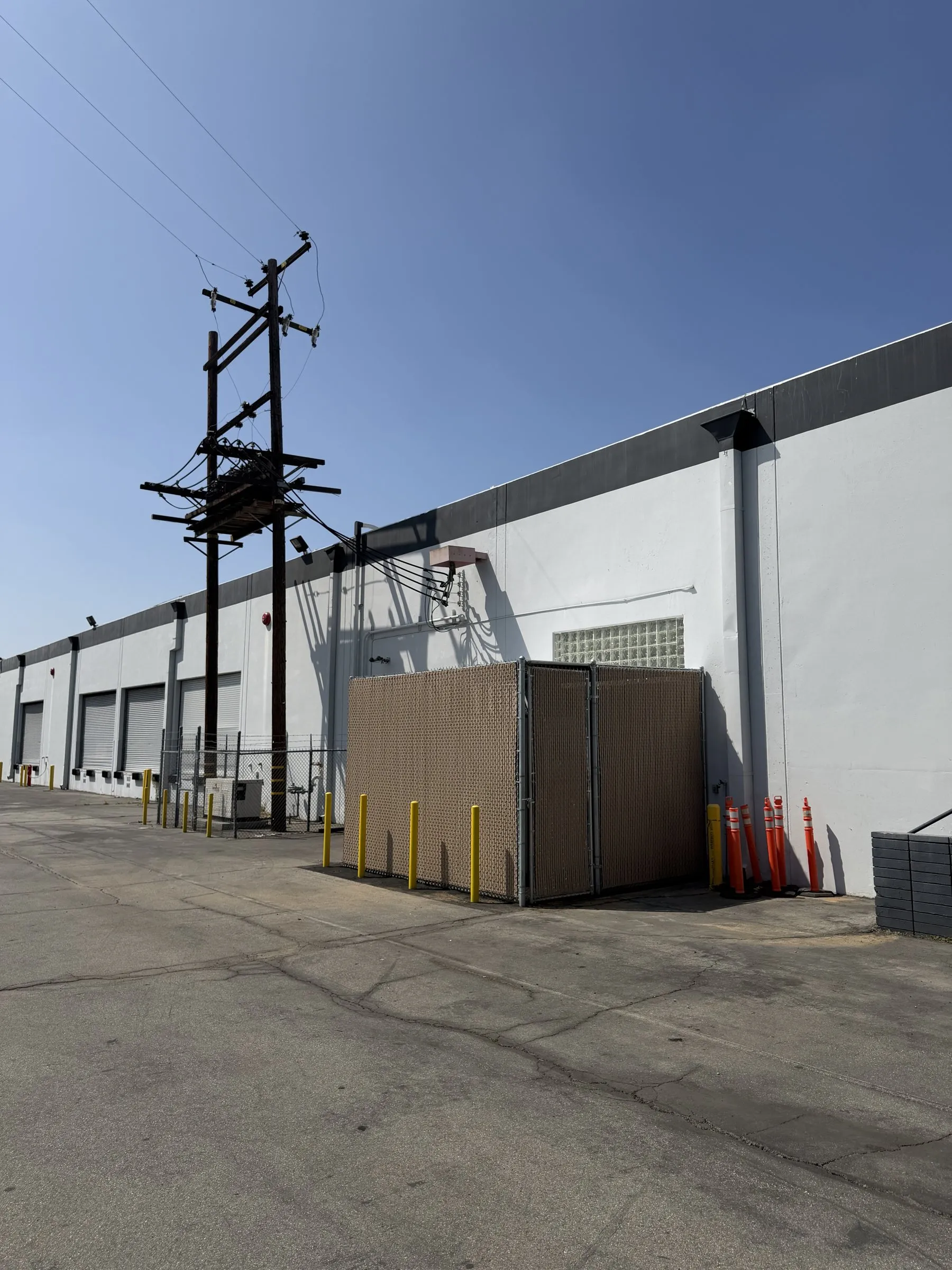
A line-side tap at the main switchgear, with the PE-stamped single-line, plot plan, point-of-connection photos and placards SCE requires.
How We Built It Right
Rooftop conduit kept on supports
Rooftop conduit rides on dedicated supports above the membrane, run in straight lines along the rows. Off the roof surface means no abrasion, no ponding against the pipe, and a roof the next roofer can actually work around.
Battery kept off the roof
Storage went to grade, not the roof: a fenced, covered enclosure keeps the cabinets out of direct sun, away from foot traffic and reachable without a ladder. Cooler batteries last longer.
Working the utility review to closure
Line-side taps get scrutiny. When SCE came back with interconnection comments, Keen produced the stamped drawings, barrier, placards and photo package and kept the application moving toward permission to operate.
Safe-harbored for the tax credit
Module procurement was timed to safe-harbor the federal credit by year-end 2025. See our 2026 incentives guide for what that protects.
What This Project Proves for Your Property
If you own or lease industrial space, this project shows a combined solar and storage build delivered on an occupied warehouse: ballasted so the roof stays watertight, storage placed where it is safe and serviceable, and the utility paperwork carried through by the same team that built it.
Keen serves industrial owners across Los Angeles County, including Los Angeles, Long Beach and Torrance. Read more about solar for warehouses and manufacturing facilities.
Questions About Projects Like This
Does ballasted racking work on any flat roof? +
Why add a battery to commercial solar? +
What is a line-side tap? +
Want This Quality on Your Property?
Tell us about your site. The team that built this Commerce project will scope yours, and we get back to you within 24 hours.
Thank You!
We've received your request and will be in touch within 24 hours.
Or call now: (949) 877-8008